Showing posts with label University of Melbourne. Show all posts

30.9.10

The Crisis We Had to Have: The International Education 'Sector' Pauses for Reflection

According to some, Australia's international education sector is in crisis. Exchange-rate shifts, concerns about violence, newly-enthusiastic competitors in the US and the UK, and changes to visa requirements for international students have conspired to make enrolment numbers stagnant, and many institutions nervous.

Under these circumstances, the prominence in Australia's public conversation of the international education "sector" is worth examining more closely and critically. The "sector" may be a useful category for accumulating statistics about total revenue and economic impact, but less helpful for understanding the programs and institutions, the students and staff who participate in them, or the specific challenges they face.

More specifically, generic sector-level discourse about international education tends to be driven by the commonality of financial scale, rather than the more elusive but more fundamental issues of inherent quality and value, which are more varied. Revenue is what they have in common - but that tends to hide rather than reveal what must now be given attention.

Policy and strategy constructed purely on the commonality that international students pay fees dislocates the necessary place of education itself as the foundation of strategic vision for colleges and universities. It objectifies students as 'clients', countries as 'markets', colleges as 'providers', and makes education itself as inspiring as making widgets.

If any more engaging vision is obscured by such language and by anxiety about revenue, should we then wonder why Australia seems vulnerable to perceptions of racism, or that we struggle to persuade some prospective students that we are offering an experience of the highest quality?

The great opportunity offered by the current crisis might be for reflection. If business as usual is not possible in some places, it's time to ask what the business is, and what it is for.

The most valuable thing would be for the balance to swing to the specifics of education itself. This will involve above all an openness to diverse strategies, whose commonality is based on the pursuit of the high quality. Quality, varied as it necessarily is, is the real common selling-point of Australian education for genuine international students.

Pursuit of quality needs to be supported by a policy and regulatory framework flexible enough to allow such diverse strategies for quality to emerge and flourish, and not merely by attempts to make institutions mark to a common bottom-line.

The irony of a public conversation and policy framework which start with the money is that they are less likely to achieve or sustain financial results. A shift of focus regarding international education, from generic revenue goals to the more varied ones of education excellence, is required for Australian educational institutions to assure their inherent quality, and hence to be capable of contributing economically as well.

2.8.09

A Cosmopolitan University?


The recent University of Melbourne Refining Our Strategy document raises a number of important questions about the international character and mission of the University. A theme of the "cosmopolitan" is discernible in its reflections on how to deepen this international engagement. Melbourne itself is known as a cosmopolitan city, whose diversity is a great strength and attraction; the University of Melbourne should aspire to reflect this character.

Although the University is justly proud of its high international student numbers, it is sobering to admit that current numbers are driven as much or more by financial need than by more strategic and educationally-based targets such as international benchmarks for excellence and diversity, or specific relationships and partnerships. So long as the University loses money on domestic undergraduate enrolments, for which fees are capped at an artificially low level by government, international students are inevitably an attractive source of revenue as much or more than partners in achievement and cooperation.

Historically, the same dependence on international undergraduate enrolments has also led to a preponderance of students from a few countries which most readily provide them at present. Could these issues be separated? To have even the same number of international students as at present, but to bring them from a more diverse set of countries and cultures, would make the challenges and prospects vastly different. Pedagogically and otherwise, this would mean a richer experience for all students, domestic or international. It is also, interestingly, reminiscent of the idea of an “assemblage of strangers from all parts in one spot”, as Newman defined the University itself.

The construction of a community of learning out of a diverse constituency has a corollary, namely that the various participants in the University are brought into a shared experience. The University of Melbourne has made a strength of its locale, and this has become a point of difference relative to other major Australian institutions. While there is no reason to avoid specific offshore activities and venues (in, say, the way Harvard has done, without in the least diluting its own strong sense of location), the University should continue to work to the specific strength of being in Melbourne.

A “cosmopolis” is literally a world city, or universal city. To pursue the “cosmopolitan” as a more robust way of developing the international character of the University implies the extension of its “public-spirited” character also. While the University has a specific responsibility to its local and national community, it also has a role in a wider world. This is a moral question, but one of immediate practical significance. An Australian higher education sector that treats international relationships primarily as revenue streams is likely to risk their sustainability.

The University, and Trinity Collge with it, can reflect further on how our international engagements should be developed to reflect more fully our mission of pursuing knowledge and serving the common, global, good.

4.11.08

The Train from Shanghai


Outside the Shanghai Art Museum, as part of the current 7th Shanghai Biennale, stands the rusting hulk of a mid-twentieth century locomotive. Close by stands a similarly-rusted group of Communist Party cadres waving in metallic decay at the departing, but static, train.

The installation by Chinese artist Jing Shijian refers to the “Up to the Mountains and Down to the Villages” campaign in the 1960s and 1970s, during which many students, even teenagers, were pressured to leave the city on trains like these to work in rural areas. These have since been described as a sort of lost generation for China, forced into rural exile and losing opportunities for formal education.

The Biennale is being attended by a quite different group of young Chinese students, with a range of opportunities and ambitions that contrast with those of their parents' generation. Groups were posing happily in front of the installation and with the iron Red Guards. Some of these are looking to travel much further afield, perhaps even overseas to Australia, to take opportunities for education.

One such was Ms Zhang, a young woman from Nanjing who came to the recent University of Melbourne Expo in Shanghai. Nanjing is not very far from Shanghai - 3 hours if you get the right train (if you are on a bus with a driver who doesn't know the way very well it can be more like 4 1/2 hours, but that's another story...). Ms Zhang caught the train to attend our late-afternoon event at the JC Mandarin Hotel and spent the whole four hours in conversations with faculty members and staff, learning about the Melbourne Model, Trinity College Foundation Studies, and the challenges and opportunities of life and study in Melbourne. Unlike some of her contemporaries she is not intent on Commerce or Medicine but wants to study Arts, with a strong interest in Media. She is not from a wealthy family - her parents are factory workers - but she has done very well at school and attends one of Nanjing's leading secondary schools. Her journey to Australia still faces some real hurdles.

Wanting to attend all the workshops we ran she and her friends found they could not catch the train they had booked for. They were short on cash and our staff were wondering how to assist them, given they had no money for a hotel room either. In the end they were happy to find they could re-book on the 11.33pm train, a milk-run that would take 6 hours to get home - they had no seats either, but would be standing or perched on bags and boxes. This hardly dampened their enthusiasm - they were so tremendously excited by what they had seen and learned.

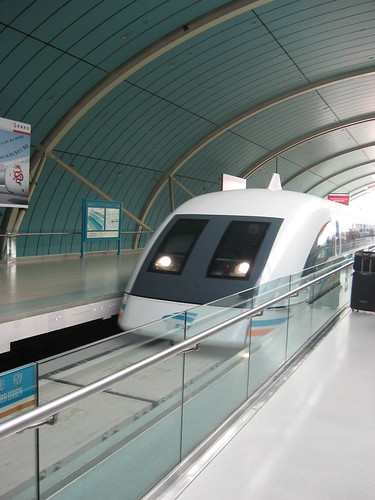
The next day I left Shanghai, taking the Maglev train to Pudong airport. The train reaches speeds of 430 km/h during its 7 minute journey. It was the day of the Shanghai F1 Grand Prix, and I was travelling faster than Lewis Hamilton. It was sobering to think how easy this journey was compared those of Chinese students now, let alone longer ago.

18.4.08

Engaging Students

Based on extracts from the Morpeth Lecture 2008, given at Christ Church Cathedral Newcastle for the Anglican Diocese and the University of Newcastle, April 17 2008

Australian higher education is undergoing what has been described as a “revolution”. Its precise form is so far unknown, but the Federal Government is undertaking a fundamental review whose consequences might be far-reaching.

Not all the challenges the universities face have been fully or publicly recognized. There is a wide recognition that under-resourced campuses and crowded lecture rooms do not always really match the qualities and aspirations of the students and staff who inhabit them. Yet there is a related challenge that goes deeper than facilities, to the heart of the educational process and its aims.

There is an emerging national conversation about issues labelled "student experience" or "engagement". The results of a survey released by the Australian Council for Educational Research just last week make an important contribution to that discourse. The Australasian Survey of Student Engagement examines "what students are actually doing, highlights the most critical aspects of learning and development, provides a ‘learner-centred, whole-of-institution’ perspective, and gives an index of students’ involvement in study".[1]

Principal author of the report was Dr Hamish Coates, a former resident tutor and President of our Senior Common Room at Trinity College. The report, Attracting, Engaging, Retaining, contains some very positive data about how students experience Australian university education. It also suggests that there are areas, such as significant interaction between teachers and students, and enrichment of the educational experience through broadening activities outside the classroom, where measures of Australian students’ engagement with the university experience lags significantly behind their American peers’.

This is a particularly interesting and significant area to reflect on from the Collegiate perspective. Having begun life as a residential College community, Trinity has sought to maintain a sense of community where teachers and students are ultimately colleagues, "members" of the College as our constitution puts it. And since our purpose has always been broader than the provision of curriculum, activities beyond the classroom have always been crucial to the learning experience.

While we should be encouraged by the emergence of a serious discourse in Australia about student experience. it is less encouraging to see it being presented under a title “Attracting, Engaging and Retaining” students, indicating perhaps that many leaders and policy makers do not yet see engagement and experience as the heart of education, but adjunct to it, or even just as a means to maintain enrolments. In fact an educational vision that is unashamedly and primarily focussed on quality of student experience is ultimately more likely to succeed at attracting and retaining, as well as engaging.

Yet this is a challenge for us at Trinity too. There is no doubt that what we are able to offer students in the Collegiate environment is exceptional. Perhaps the challenge we face, together with the University and other Colleges, is how to make this kind of educational experience more widely available, and less the preserve of an exceptional and privileged few.


[1] Attracting, Engaging and Retaining: New Conversations About Learning (Camberwell, Vic: ACER, 2008)

21.6.07

The (Other) Idea of a University

I am beginning this Trinity-related blog by posting a version of a talk also published in TrinityTODAY a few weeks ago...

Debates about the nature of a University usually involve contrasts between the “liberal” model represented by John Henry Newman’s The Idea of a University, and a more pragmatic ideal that emphasizes the needs of society and training for the professions.

University education usually needs both (the Growing Esteem strategy for the University of Melbourne establishes a place for each. Its new undergraduate degrees will emphasize “breadth and depth”, including requirements for interdisciplinary study, while professional and research degrees, geared solely to graduates, will serve for vocational outcomes).

Yet an alternative pair of “ideas” of the University might be suggested. In Newman’s era, there were two quite different aspects of the University. One was the experience of “going up” to Oxford or Cambridge, living as a member of a College and reading particular subjects. The other was examination and attainment of a degree, which not all students sought or were even eligible for. This measure of accomplishment assumed, but did not replace, the fundamental experience of being a part of the University and its life.

When Newman asked the question “What is a University”, he emphasized community rather than curriculum; the University is “the assemblage of strangers from all parts in one spot”. Australian Universities, however, have tended to assume the reverse, thinking of the University as defined by examinations more than experience, by curriculum more than community. Educational achievement, and University degrees in particular, are supposed to reflect the examination of knowledge or skill, but say little about the particular experience that might have led there. The degree itself has become a supposed guarantee of standards, a mechanism that promises the supposed parity resulting from widely (or even wildly) different experiences, rather than symbol of one held in common.

One reason for this separation of examination from experience in Australia has been geographical isolation. We have been particularly adept at finding ways to deliver information across great distances, long before the internet ushered “distance learning” or “flexible delivery” into the vocabularies of educators. The need to organize and recognize such forms of teaching and learning added to the distinction between experience and examination Australians inherited from the English tradition.

Another distinctive Australian factor is the unevenness of Collegiate or community life. Since the forms of common life that distinguished Colleges once seemed necessarily religious, they provided a means for the “sandstone” Universities to assert their essential secularity, while dealing with religion in a “co-curricular” fashion. The cost of this approach was the marginalization of community life and the emphasis on experience that Newman and the other great figures of nineteenth-century University theorizing, such as Alexander von Humboldt and Charles Eliot, took for granted.

For Australians, University education thus became the inculcation and examination of a body of knowledge, not the experience of being a community of learners. To an extent that would not so readily have been countenanced in the UK, the USA or Europe, University education in Australia came to be seen as focussed on the lecture hall alone and on the absorption of a canon of knowledge, rather than also on the dining hall and the exchange of views across disciplines and perspectives.

Recent developments in Australian Higher Education have underlined the problem. I myself went through undergraduate education, about twenty-five years ago, without the benefit of a Collegiate experience. I did have access to community life through an active Student Guild, and I was also in the Honours program of a relatively small department where students knew one another, and the most senior academics as well. Now, increases in class sizes on the one hand, and the gratuitous VSU agenda on the other, have threatened the broader forms of community life as well as the narrower academic collegiality necessary to the formation of would-be scholars.

American poet and teacher John Ciardi said that “a University is what a College becomes when the faculty loses interest in the students”. In the American context these words have a slightly different meaning, but there is a message for us here too. A University that does not understand what educational community provides has lost more than just an interest in students. Colleges may yet be part of the answer.