Showing posts with label Trinity College Foundation Studies. Show all posts

4.9.12

Towards 2022 - Trinity Seeks Needs-Blind Admissions

[From an address given at the 140th Anniversary Gala Dinner at the Melbourne Museum, August 25th 2012]

Trinity can be seen as many things: a place, a tradition, a set of beliefs. But above all Trinity is people; a community, whose diversity is one of the reasons for its excellence. The faces you see around you - and of course many others we recall - are the reason we are here. Tonight, for these few hours, Trinity is right here.

Trinity is a larger and more diverse institution than at any time in its past; in addition to our residential life, the work of our Foundation Studies program, the Theological School, and Young Leaders' programs for school students all provide unique educational opportunities for students from diverse backgrounds to fulfil their potential and impact the wider world, pro ecclesia, pro patria as our motto states.

We do this work in the context of the University of Melbourne, recently confirmed as Australia's, and indeed one of the world's, leading research universities; in that very large community, the resident students of Melbourne's colleges and not least of this one are those who most clearly enjoy an experience comparable to those of the world's leading educational institutions.

Our reality is now global, as well as local. Our students and their ambitions reflect that; and so do those of the College. But the global reality always has a local and a human face; and I invite you to meet a few of these members of your College now.

Those current and recent resident students whose faces have just seen include young people from urban and regional Australia, and from Europe and Asia. They include an indigenous Australian, and an Iraqi refugee; they are young people who are already having impacts in the arts, in scientific and medical research, and in the worlds of ideas and education, and of social service and community leadership. They all received substantial scholarship support, and all of them have had remarkable opportunities because they were at Trinity and the University of Melbourne.

Our success in bringing them to Trinity has depended on the support many alumni and friends have offered, and I thank you for that support.

But now we want to take Trinity's capacity to transform lives to a new level. We intend to take a step so far unique in Australian higher education, and to make our resident community genuinely needs-blind - that is, to offer the opportunity of Trinity's outstanding education and other experiences to the students best-qualified to benefit from it and contribute to it, regardless of their background or financial need. We wish also to increase substantially our ability to offer scholarship support in the Theological School and in Foundation Studies, to make these outstanding educational opportunities increasingly available to new generations of students from various backgrounds.

Although this cost of this vision will change historically and vary from time to time, we believe that we should be seeking to raise an additional endowment of 25 million dollars in today's terms to achieve it. I am delighted to announce that goal to you tonight, and invite you to help the College attain it.

This challenge starts tonight. My hope is that when we gather in ten years time to celebrate the sesquicentenary of the College, we will be able to celebrate this achievement and many more stories, and more faces, whose lives reflect that commitment to excellence, community and diversity which makes them, and us, Trinity.

29.1.11

After the Perfect Storm: The Future of International Education in Australia

Does Australia's struggling engagement with international education have a future?

News media have reported widely on something of a "perfect storm" over the last year or so for institutions dependent on international enrolments, particularly from Asia. The combination of events has been problematic: reputational damage from racist incidents in the Australian community, exchange rate shifts making Australia a more expensive destination, increasing activity in marketing from the UK and the USA, and new restrictions on Australian visas for certain countries. Together these have made life tough for Australian colleges and universities.

Going deeper however, the news varies a great deal according to the kind of institution and the sort of courses students are seeking to undertake. New figures from Australian Education International show, unsurprisingly, that Indian students seeking VET courses fell most dramatically in 2010, by over 20%. Probably for a different set of reasons, English-language courses were similarly hit.

On the other hand, the number of international students enrolling in Australian university courses actually grew in 2010. Part of the difference has to do with time-frames; students often come to higher education through feeder programs, including English-language courses or Foundation Studies programs like that at Trinity. As a result their decisions are really made a year or more before their University enrolment, and the consequences of changes in preferences and patterns take longer to appear. Close to home for instance, Trinity had a particular good year for recruitment in 2010, and the University of Melbourne will thus have a good one in 2011. We expect 2011 to be solid but less spectacular, and similarly therefore the University might expect to have slightly lower demand from international students in 2012.

"Slightly" less demand and "solid" performance is indeed the order of the day for Australia's most desirable institutions and high-quality programs in higher education. Others do clearly have (even) greater challenges. Talk of "crises" and "crashes", however, results from clumsy aggregation of issues, as well as of statistics, in a sector whose diversity now makes it increasingly unhelpful to consider it as a single whole for most purposes. True, the net impact on the Australian economy of the downturns in VET and some other sectors is serious; but ironically the tendency to treat the sector as a coherent whole, and to make policy (e.g., over visa restrictions) as though it were so, has compounded the problems faced by some institutions.

Public policy and public discourse over higher education have long been mesmerized by the bumper crop of international students and their capacity to close funding gaps for public institutions and send cash into Australian communities. This undeniably important opportunity has been seized both creatively and clumsily, depending on where and what we are considering. The unedifying stories of fly-by-night providers exploiting students from India constitute an extreme case; but any institution, however venerable, that sees international students merely as an answer to a funding problem is not only acting dubiously relative to its own mission and values, but riding for a fall with regard to that very part of their activity.

Students from Asia have been attracted to Australian institutions because of the quality of our offerings and the reasonable cost of obtaining them (we should admit that the attraction of permanent residence is often potent as well, but that's another story). The survivors, in VET and higher education and elsewhere, from the "perfect storm" will be those best able to demonstrate that quality and value, and necessarily therefore a deeper sense of their own educational mission and identity.

Without a bigger picture - a sense of how our contribution to these students' education connects with the mission of a university and its role in contributing to a global public good - we risk not only failing the moral challenge of a shrinking world, but undermining the quality proposition of the original offering.

If we have passed the "high water mark" of the recent rich tide of enrolments, as it has been suggested, all the more reason to ensure now that we have firm ground to stand on, and make sure we have a high-quality future to offer both Australian and international students.

30.9.10

The Crisis We Had to Have: The International Education 'Sector' Pauses for Reflection

According to some, Australia's international education sector is in crisis. Exchange-rate shifts, concerns about violence, newly-enthusiastic competitors in the US and the UK, and changes to visa requirements for international students have conspired to make enrolment numbers stagnant, and many institutions nervous.

Under these circumstances, the prominence in Australia's public conversation of the international education "sector" is worth examining more closely and critically. The "sector" may be a useful category for accumulating statistics about total revenue and economic impact, but less helpful for understanding the programs and institutions, the students and staff who participate in them, or the specific challenges they face.

More specifically, generic sector-level discourse about international education tends to be driven by the commonality of financial scale, rather than the more elusive but more fundamental issues of inherent quality and value, which are more varied. Revenue is what they have in common - but that tends to hide rather than reveal what must now be given attention.

Policy and strategy constructed purely on the commonality that international students pay fees dislocates the necessary place of education itself as the foundation of strategic vision for colleges and universities. It objectifies students as 'clients', countries as 'markets', colleges as 'providers', and makes education itself as inspiring as making widgets.

If any more engaging vision is obscured by such language and by anxiety about revenue, should we then wonder why Australia seems vulnerable to perceptions of racism, or that we struggle to persuade some prospective students that we are offering an experience of the highest quality?

The great opportunity offered by the current crisis might be for reflection. If business as usual is not possible in some places, it's time to ask what the business is, and what it is for.

The most valuable thing would be for the balance to swing to the specifics of education itself. This will involve above all an openness to diverse strategies, whose commonality is based on the pursuit of the high quality. Quality, varied as it necessarily is, is the real common selling-point of Australian education for genuine international students.

Pursuit of quality needs to be supported by a policy and regulatory framework flexible enough to allow such diverse strategies for quality to emerge and flourish, and not merely by attempts to make institutions mark to a common bottom-line.

The irony of a public conversation and policy framework which start with the money is that they are less likely to achieve or sustain financial results. A shift of focus regarding international education, from generic revenue goals to the more varied ones of education excellence, is required for Australian educational institutions to assure their inherent quality, and hence to be capable of contributing economically as well.

2.8.09

A Cosmopolitan University?


The recent University of Melbourne Refining Our Strategy document raises a number of important questions about the international character and mission of the University. A theme of the "cosmopolitan" is discernible in its reflections on how to deepen this international engagement. Melbourne itself is known as a cosmopolitan city, whose diversity is a great strength and attraction; the University of Melbourne should aspire to reflect this character.

Although the University is justly proud of its high international student numbers, it is sobering to admit that current numbers are driven as much or more by financial need than by more strategic and educationally-based targets such as international benchmarks for excellence and diversity, or specific relationships and partnerships. So long as the University loses money on domestic undergraduate enrolments, for which fees are capped at an artificially low level by government, international students are inevitably an attractive source of revenue as much or more than partners in achievement and cooperation.

Historically, the same dependence on international undergraduate enrolments has also led to a preponderance of students from a few countries which most readily provide them at present. Could these issues be separated? To have even the same number of international students as at present, but to bring them from a more diverse set of countries and cultures, would make the challenges and prospects vastly different. Pedagogically and otherwise, this would mean a richer experience for all students, domestic or international. It is also, interestingly, reminiscent of the idea of an “assemblage of strangers from all parts in one spot”, as Newman defined the University itself.

The construction of a community of learning out of a diverse constituency has a corollary, namely that the various participants in the University are brought into a shared experience. The University of Melbourne has made a strength of its locale, and this has become a point of difference relative to other major Australian institutions. While there is no reason to avoid specific offshore activities and venues (in, say, the way Harvard has done, without in the least diluting its own strong sense of location), the University should continue to work to the specific strength of being in Melbourne.

A “cosmopolis” is literally a world city, or universal city. To pursue the “cosmopolitan” as a more robust way of developing the international character of the University implies the extension of its “public-spirited” character also. While the University has a specific responsibility to its local and national community, it also has a role in a wider world. This is a moral question, but one of immediate practical significance. An Australian higher education sector that treats international relationships primarily as revenue streams is likely to risk their sustainability.

The University, and Trinity Collge with it, can reflect further on how our international engagements should be developed to reflect more fully our mission of pursuing knowledge and serving the common, global, good.

4.11.08

The Train from Shanghai


Outside the Shanghai Art Museum, as part of the current 7th Shanghai Biennale, stands the rusting hulk of a mid-twentieth century locomotive. Close by stands a similarly-rusted group of Communist Party cadres waving in metallic decay at the departing, but static, train.

The installation by Chinese artist Jing Shijian refers to the “Up to the Mountains and Down to the Villages” campaign in the 1960s and 1970s, during which many students, even teenagers, were pressured to leave the city on trains like these to work in rural areas. These have since been described as a sort of lost generation for China, forced into rural exile and losing opportunities for formal education.

The Biennale is being attended by a quite different group of young Chinese students, with a range of opportunities and ambitions that contrast with those of their parents' generation. Groups were posing happily in front of the installation and with the iron Red Guards. Some of these are looking to travel much further afield, perhaps even overseas to Australia, to take opportunities for education.

One such was Ms Zhang, a young woman from Nanjing who came to the recent University of Melbourne Expo in Shanghai. Nanjing is not very far from Shanghai - 3 hours if you get the right train (if you are on a bus with a driver who doesn't know the way very well it can be more like 4 1/2 hours, but that's another story...). Ms Zhang caught the train to attend our late-afternoon event at the JC Mandarin Hotel and spent the whole four hours in conversations with faculty members and staff, learning about the Melbourne Model, Trinity College Foundation Studies, and the challenges and opportunities of life and study in Melbourne. Unlike some of her contemporaries she is not intent on Commerce or Medicine but wants to study Arts, with a strong interest in Media. She is not from a wealthy family - her parents are factory workers - but she has done very well at school and attends one of Nanjing's leading secondary schools. Her journey to Australia still faces some real hurdles.

Wanting to attend all the workshops we ran she and her friends found they could not catch the train they had booked for. They were short on cash and our staff were wondering how to assist them, given they had no money for a hotel room either. In the end they were happy to find they could re-book on the 11.33pm train, a milk-run that would take 6 hours to get home - they had no seats either, but would be standing or perched on bags and boxes. This hardly dampened their enthusiasm - they were so tremendously excited by what they had seen and learned.

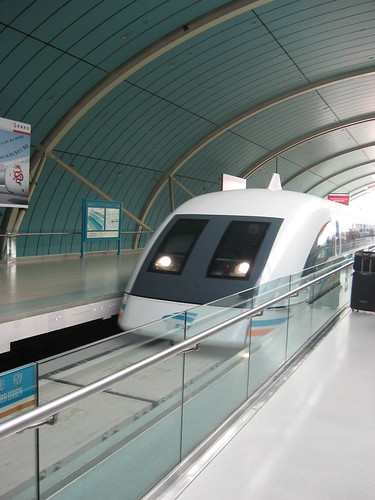
The next day I left Shanghai, taking the Maglev train to Pudong airport. The train reaches speeds of 430 km/h during its 7 minute journey. It was the day of the Shanghai F1 Grand Prix, and I was travelling faster than Lewis Hamilton. It was sobering to think how easy this journey was compared those of Chinese students now, let alone longer ago.

6.3.08

Countering Cash Cows: Rethinking How Australian Higher Education Views International Students

Update: A version of this piece was published today (12 March 08) in The Australian.

International students’ interests are not at the forefront of current debates about Higher Education funding in Australia. Their access to Australian Universities will not change radically with the implementation of new policies that abolish full-fee domestic places – as before, students from overseas will be fee-payers. But the changes promised by the Rudd Government, aimed to benefit domestic students, entrench some unhappy assumptions about those from elsewhere.

Over the last few decades, Australian Universities have built up a remarkable and problematic dependence on income derived from overseas students, often receiving more revenue from their tuition fees than from Commonwealth Grants. The capacity of such students to offer this revenue stream risks being the sole determiner of their value to the Australian system, student numbers being determined not by policy factors relating to educational experiences or outcomes, so much as the ‘bottom line’ or other practical limits.

Educational leaders and policy makers are certainly sensitive to this issue. In an important speech at the Melbourne Press Club last week, Monash University Vice-Chancellor Richard Larkins – also an alumnus and Fellow of Trinity – made some telling points about the challenges facing the sector, including the place of international students. He noted, for instance, the inhospitable message created by something as concrete and small-minded as the lack of public transport concessions to students from overseas.

Professor Larkins also called for the deregulation of the Student Contribution Amount for HECS, which would allow Universities themselves to set fees they deemed appropriate and viable. This is a complicated issue, but I would add one further reason it should be taken very seriously.

There is a sort of structural temptation to treat Australia’s international engagement, particularly for undergraduate education, as primarily financial. The inability of Australian Universities to charge fees beyond current HECS levels leaves international students easy targets for cash-strapped and short-sighted University managers and planners. Their renewed status as the sole group of full-fee payers, as well as the established reliance on international students in the sector, may be deeply subversive of attempts to set enrolment targets based on any other factor. Such an approach is ultimately self-defeating because it is not driven by the desire for excellence that is necessary for the success of the institutions, and risks undermining the quality of what is being offered to those on whose enthusiasm the system depends.

Although Australia in general is well-regarded by international students who come here, this positive view is no cause for complacency when an increasingly competitive future looms. Recent research suggests that the specific institution, rather than a national system, will be the key to attracting quality students in future (Campus Review 19.02.08, pp. 1, 5). Australian Universities need to base their international strategies first on maintaining and developing quality, and by doing so address specific concerns such as pedagogy and student experience. They also need to be able to think about goals that recall and go beyond the Colombo Plan of the mid-twentieth century, reclaiming the place of education as a basis for international relations and social development.

We risk relying on the flawed assumption that the relationship between international enrolments and quality of educational experience runs largely in one direction, and that so long as the funding holds out all students will benefit. This is just one symptom of a broader flaw in discourse about Australian Higher Education, the one which imagines curriculum alone as a guarantee of desired University outcomes. If that were true, it would matter little to the quality of education just who participated, or where. In fact we know that students benefit as much from the social, cultural and aesthetic environment in which their experience takes place as from other factors – one element of which is just who does participate.

For international students’ sake but for Australians’ too, we need to have aims for international engagement based on considerations of quality such as pedagogy and student experience. Trinity itself runs what is recognized as a leading Foundation Studies (TCFS) program in close association with the University of Melbourne. We are benefiting from strong enrolments at present, but believe we have achieved them by maintaining and promoting quality of teaching and learning for their own sake. Since our program is specifically for international students, we don’t have the option of admitting Australians and anticipating the more diverse student experience at the University, but we know that we benefit pedagogically – not just financially - from having students from as many as 25 foreign countries. Their diversity is a huge advantage, as well as a challenge, to teachers and to the students themselves. The University also benefits from the presence of a group of students whose rich experience with us has proven to be a successful preparation for what comes after.

Australian Universities need to ask now just what forms of educational engagement with a global reality will make them better places to teach, learn and research. The second question, not the first, is how all this relates to the ‘bottom line’. Of course the capacity to ask such questions itself depends on financial viability, and there is the rub. But one thing is clear – selling education internationally without regard to the impact of the sale on the product itself is unsustainable. If Australian Universities want to offer anything to our neighbours in decades to come, we must pay more attention not just to what we are offering now, but to whom we offer it also. That must mean giving our Universities the scope to consider international students as enriching our campuses for pedagogical purposes, and not merely for economic ones.